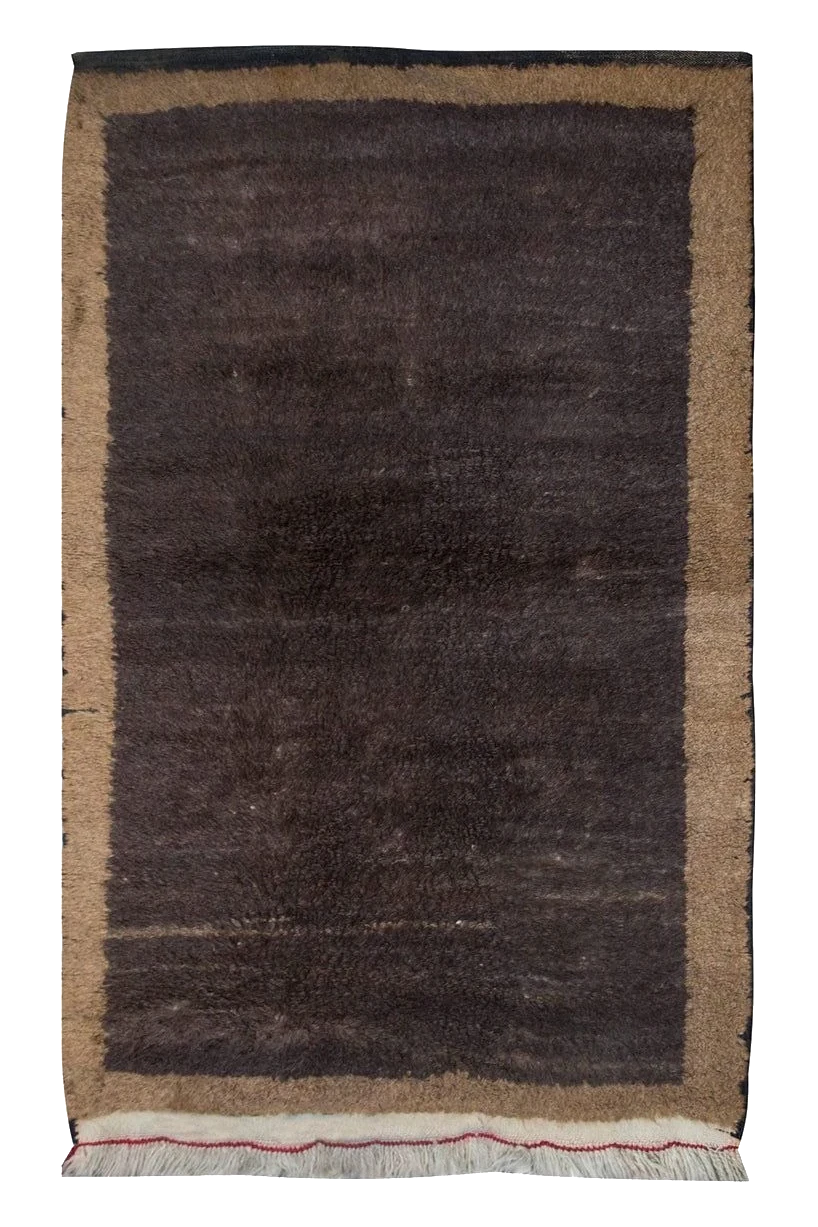
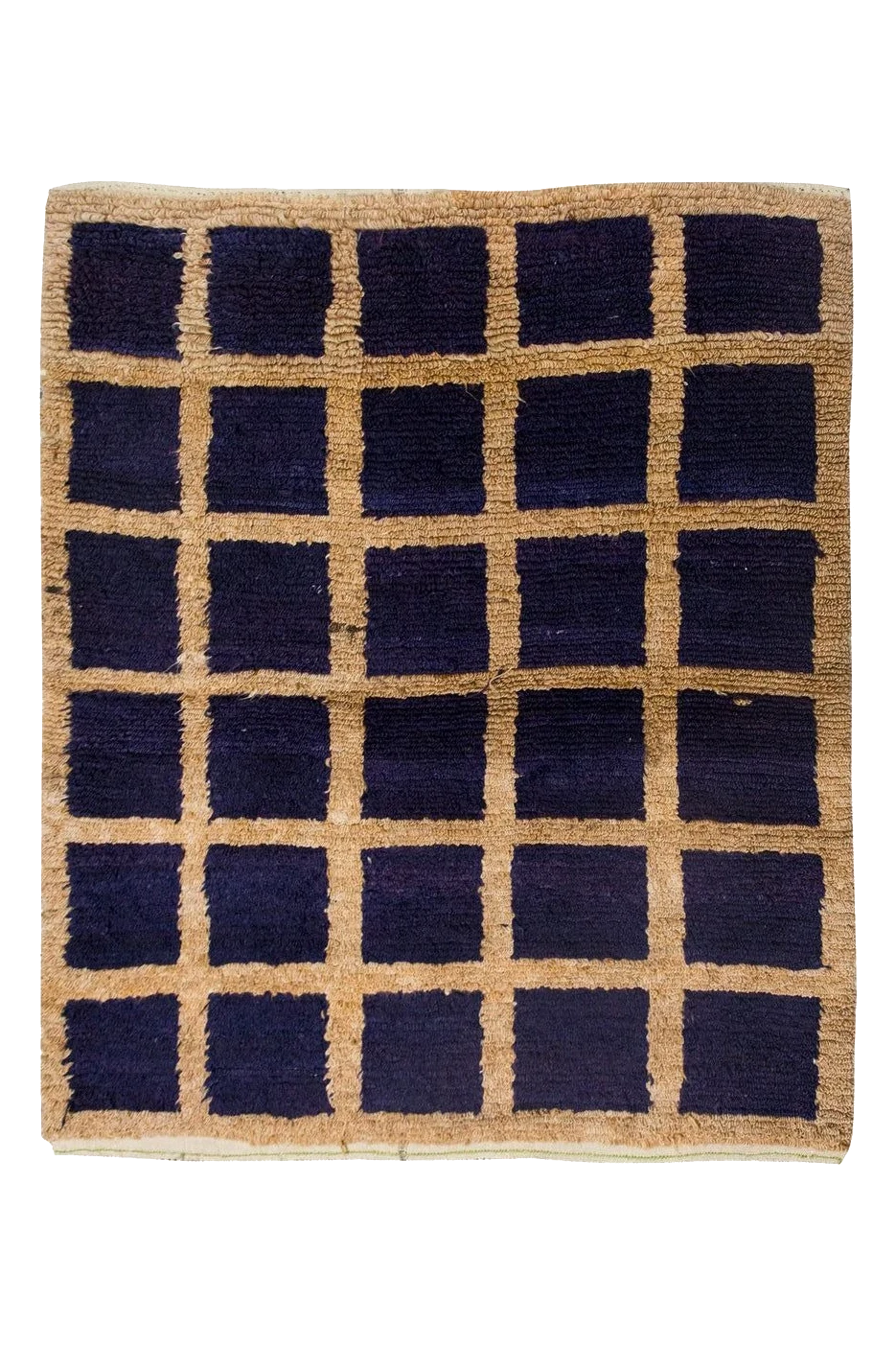
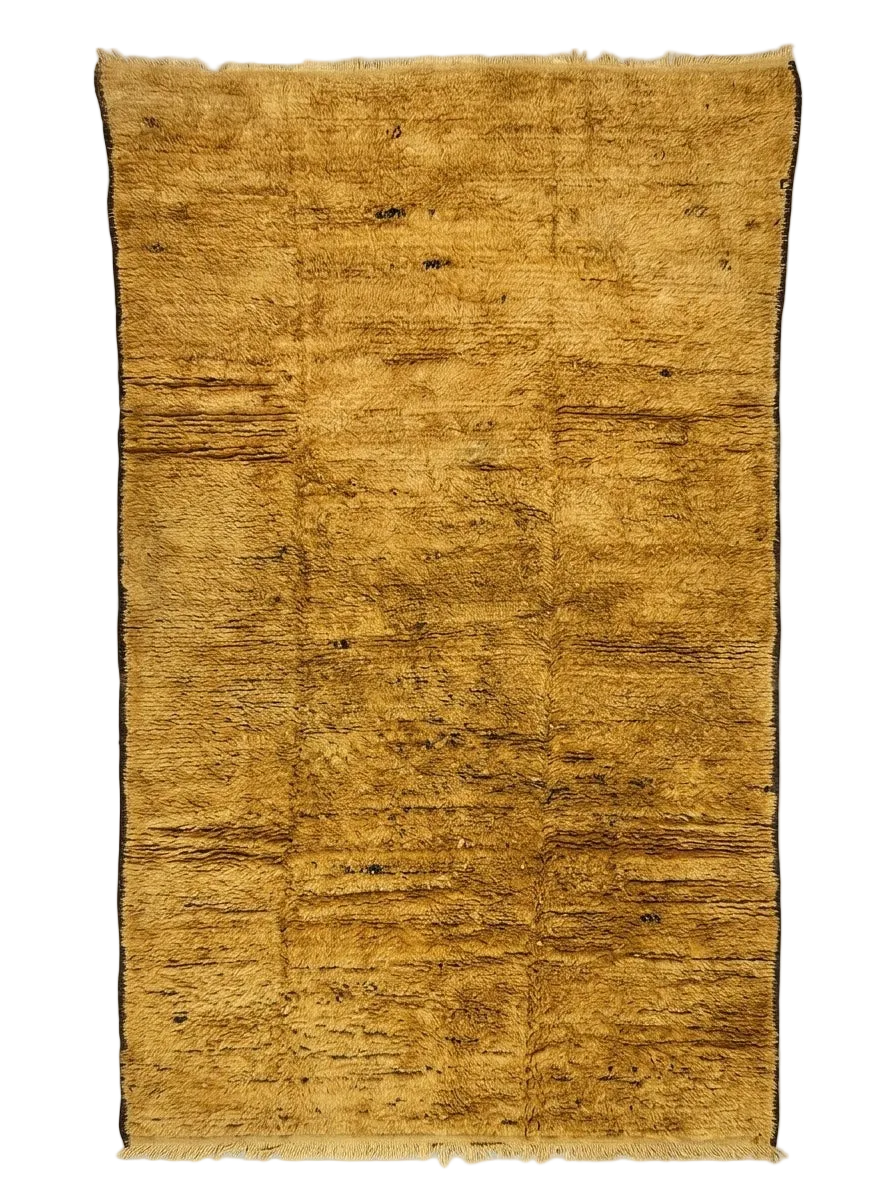
From the Konya region of central Anatolia — often the villages around Karapınar — Tulu rugs are made to be felt as much as seen. The name comes from the Turkish tüylü, meaning "hairy" or "shaggy," and that long, soft, deep pile is the whole character of the piece. Originally woven by nomads as bedding and warmth against harsh Anatolian winters, they were functional before they were decorative: coarse, honest weaving in simple geometric designs and a restrained, natural palette. That same plainness is what makes them feel so at home in modern interiors today — quiet, tactile, and warm underfoot. Hand-knotted in undyed or naturally dyed wool, each is a plush, primitive piece of craft closely related in spirit to the Gabbeh of Iran and the Beni Ourain of Morocco.