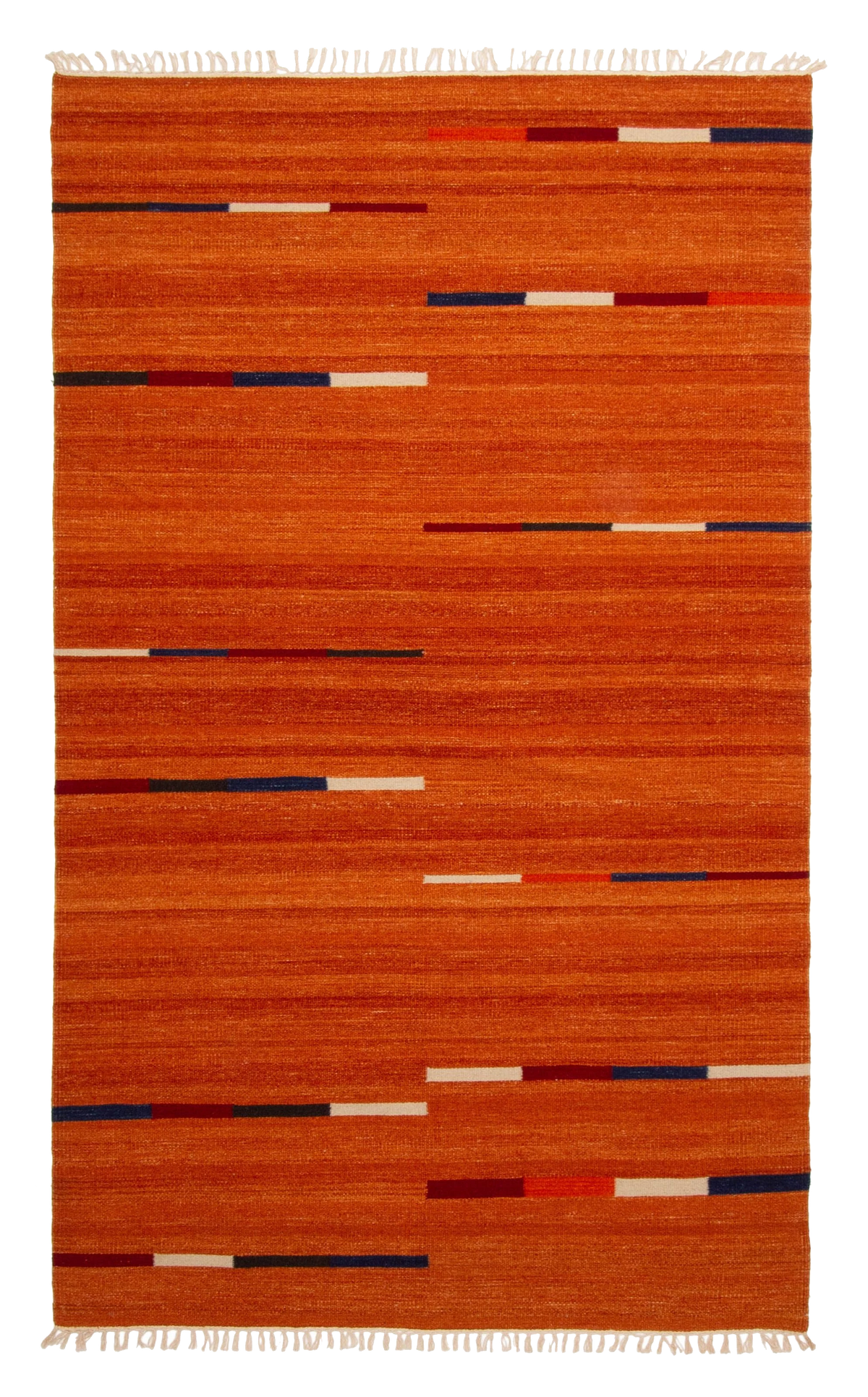
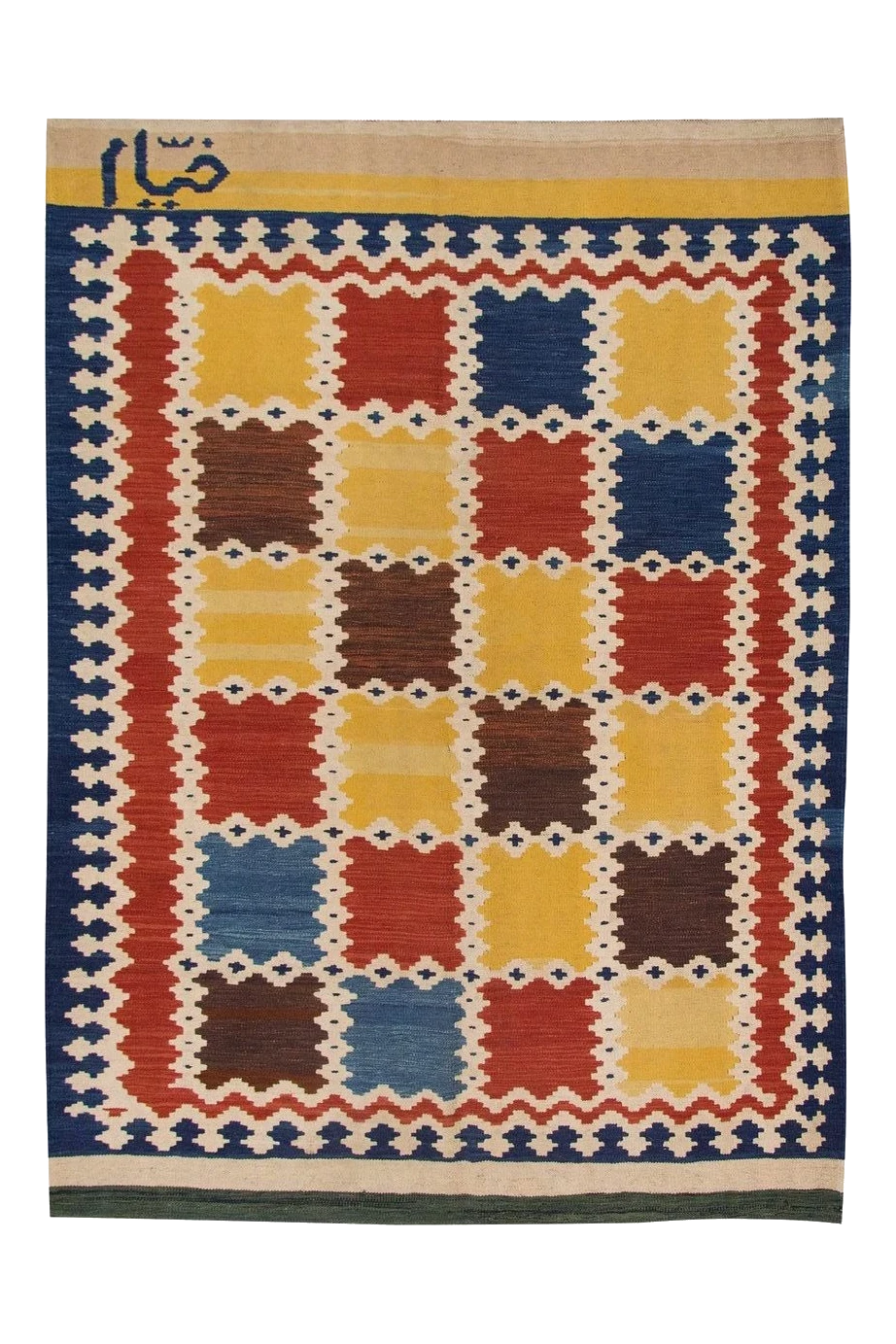
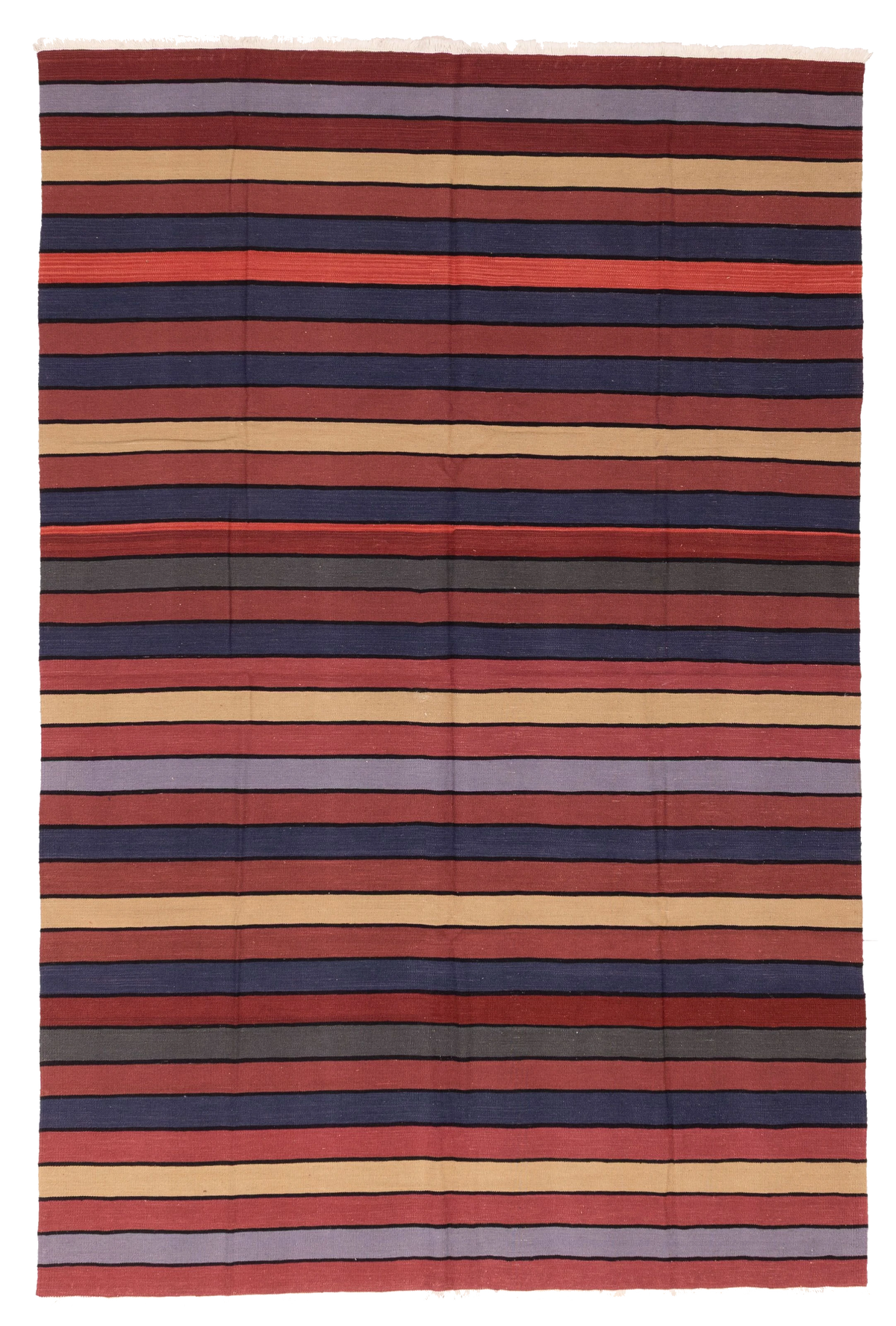
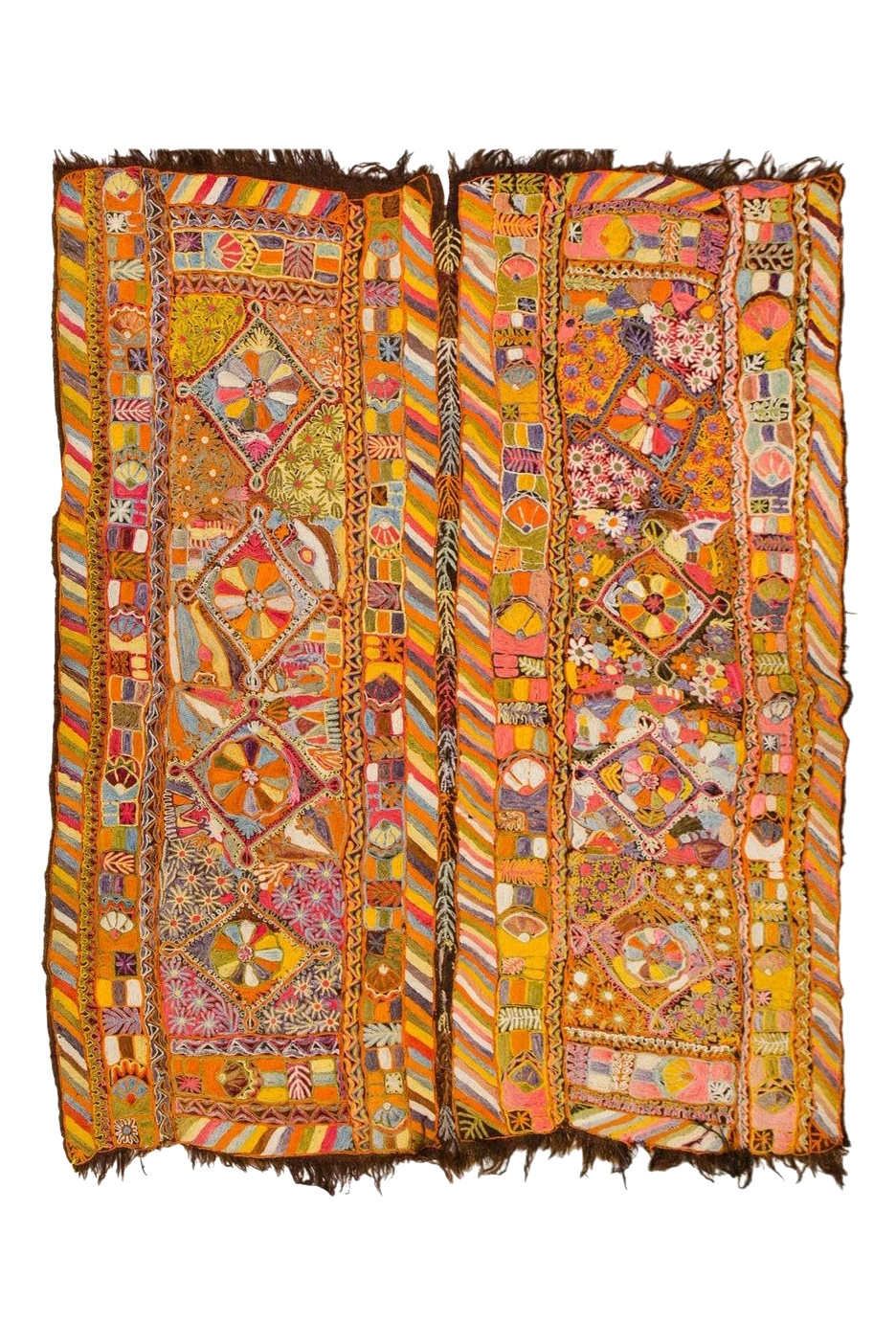
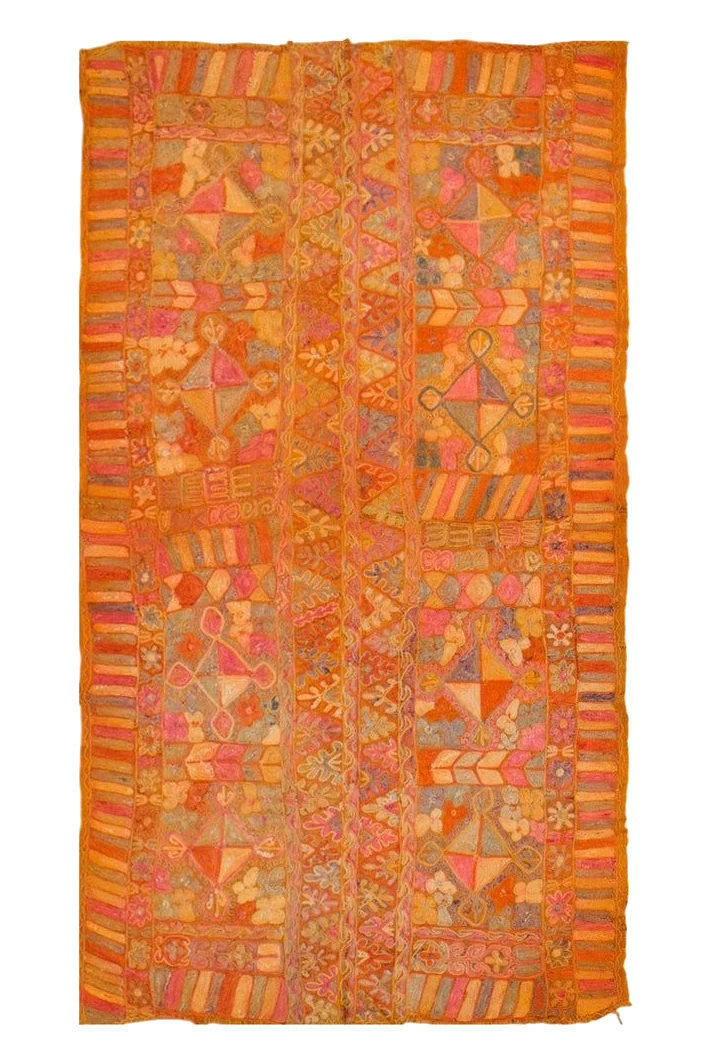
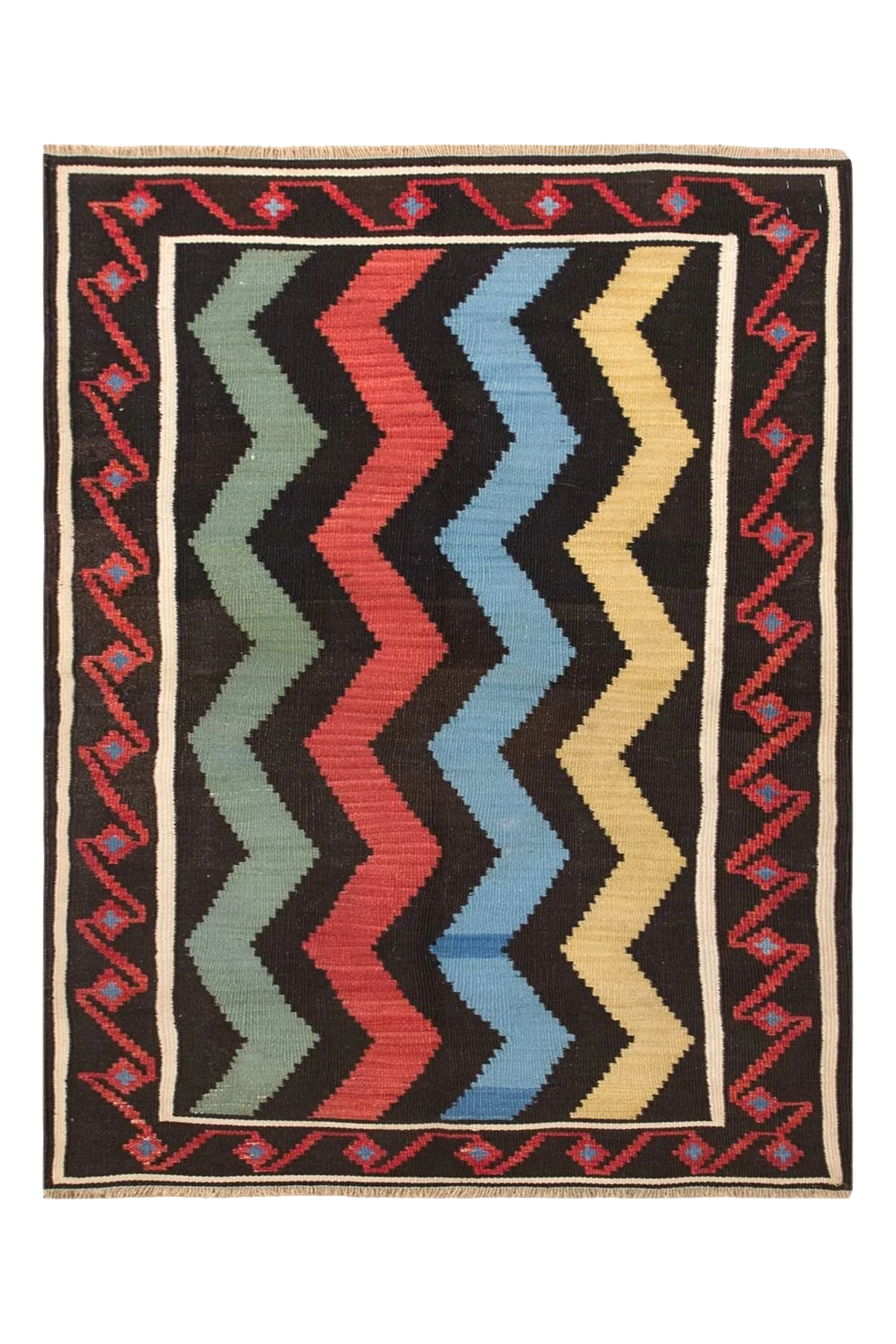
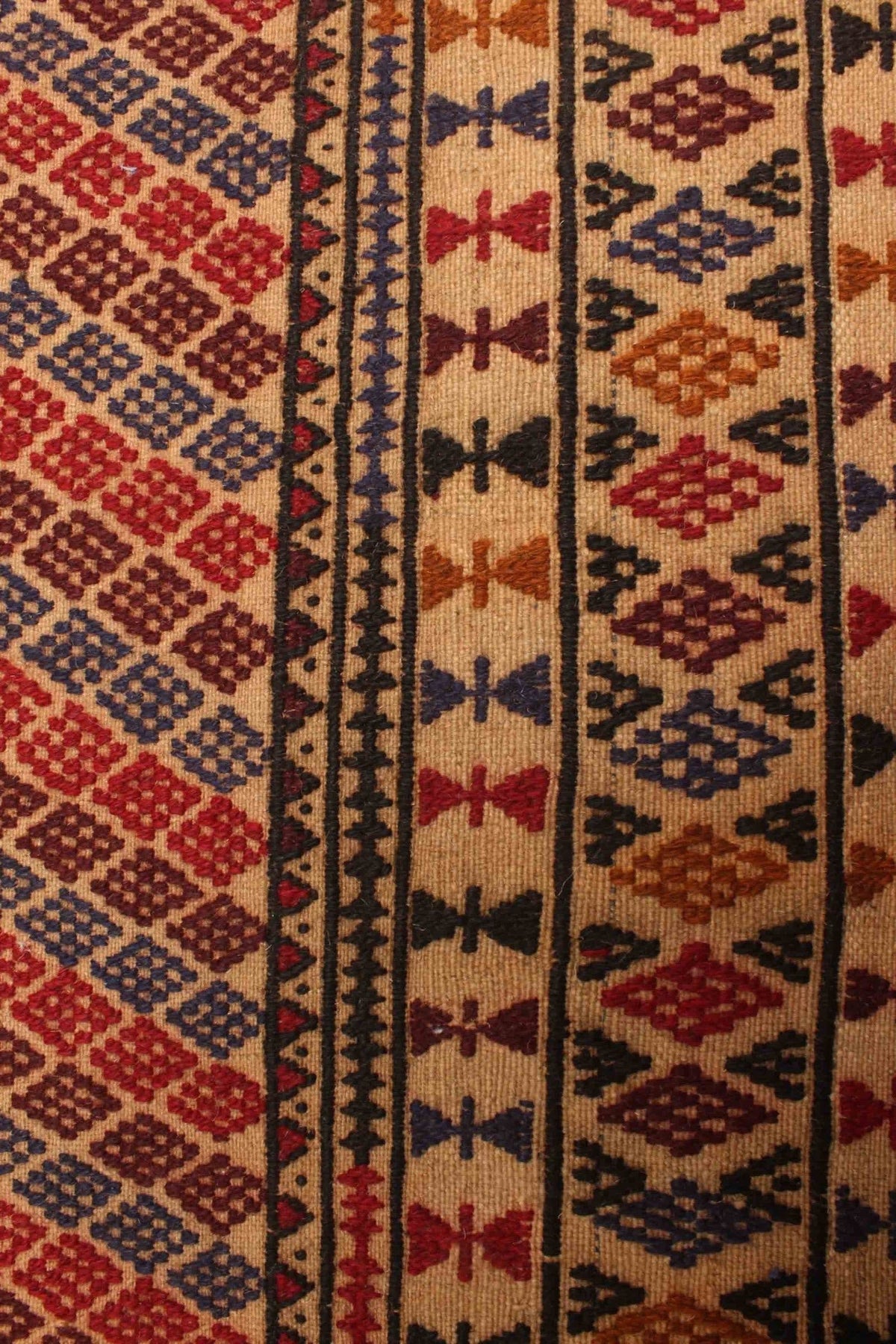
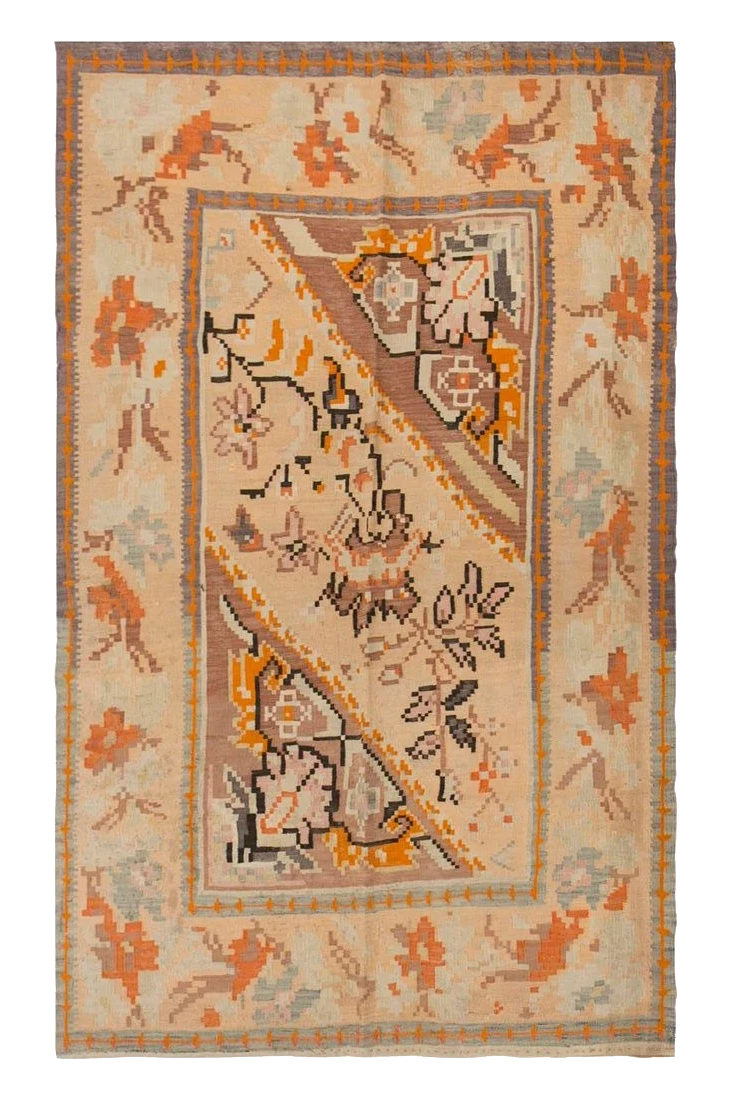
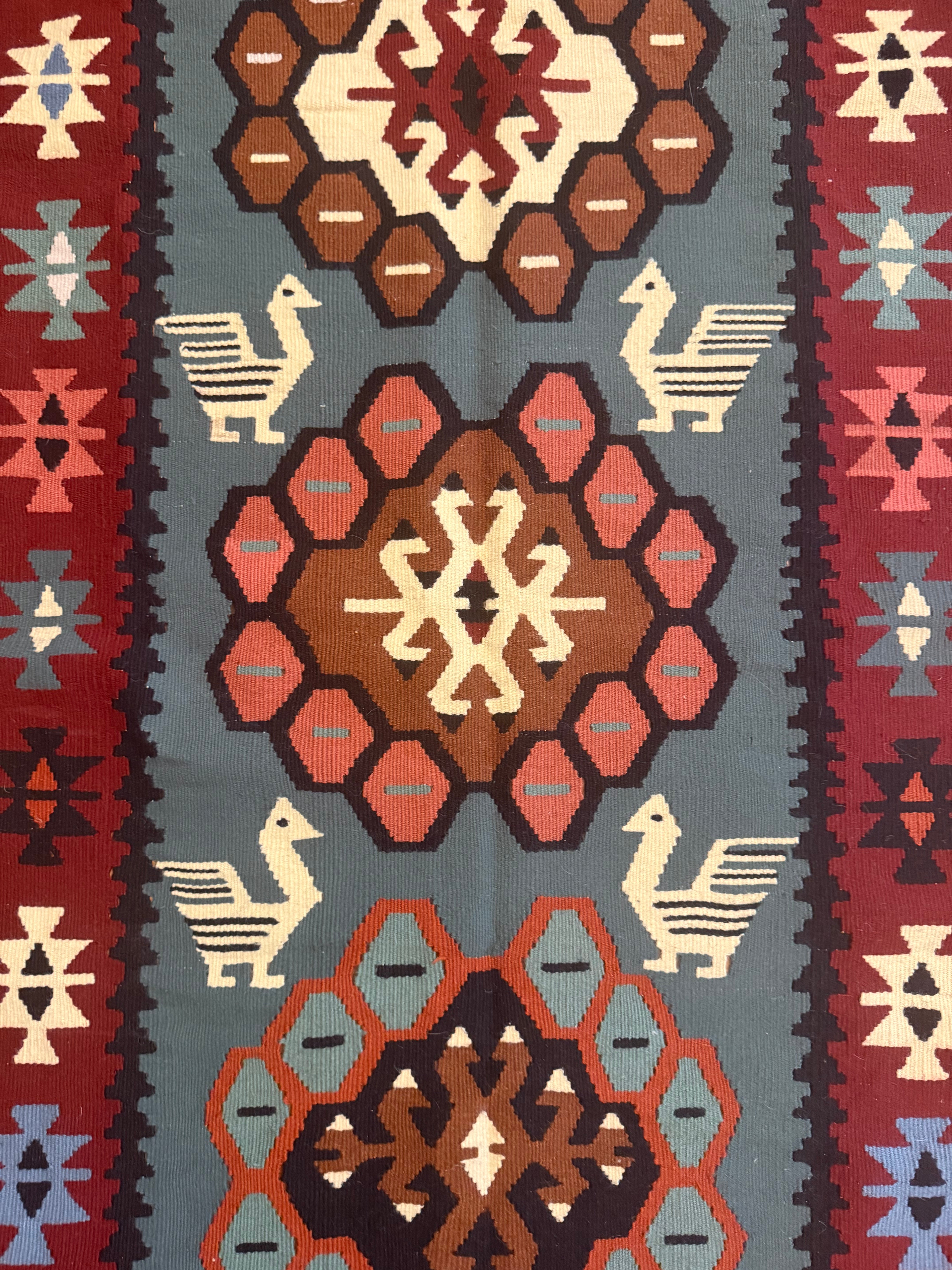
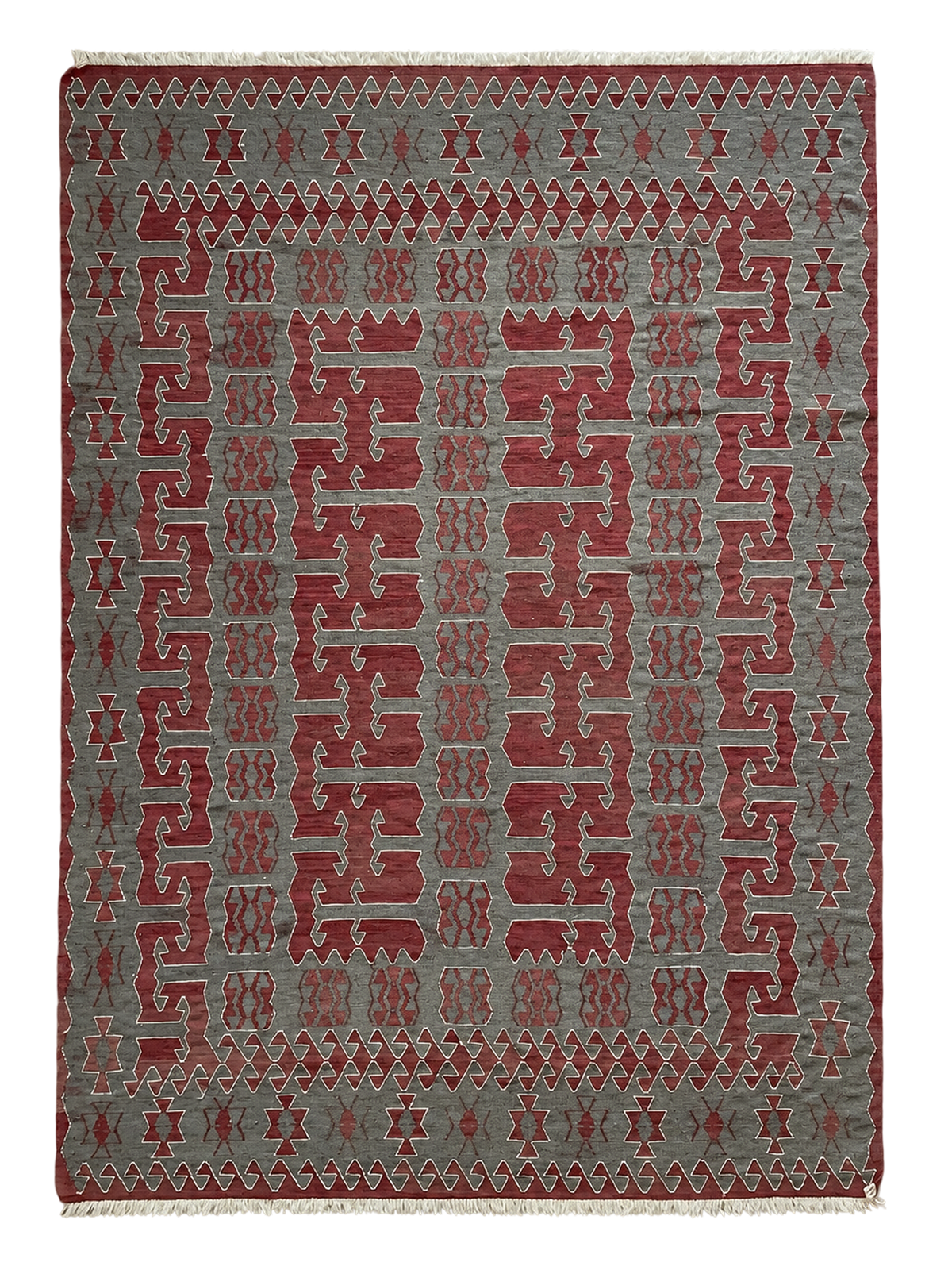
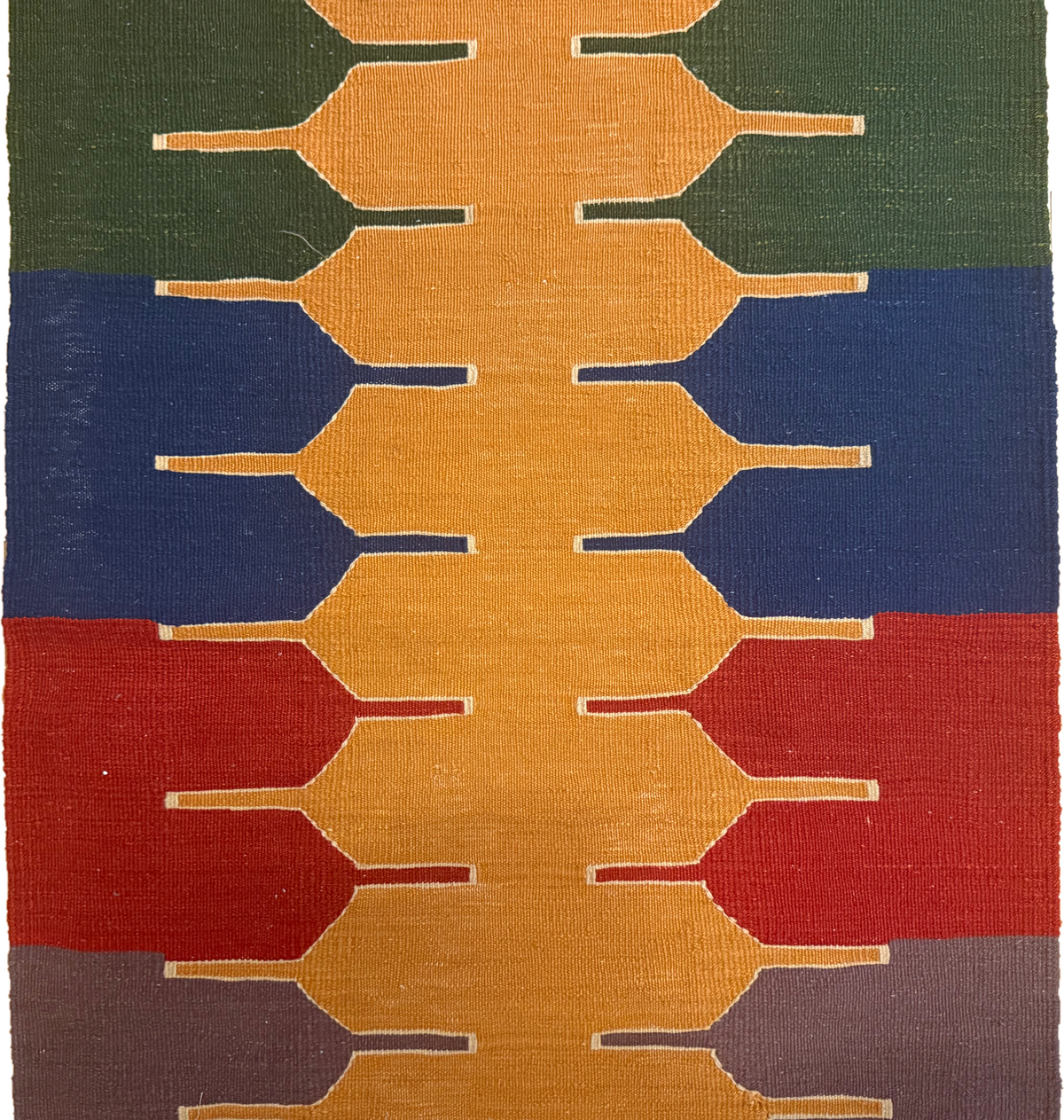
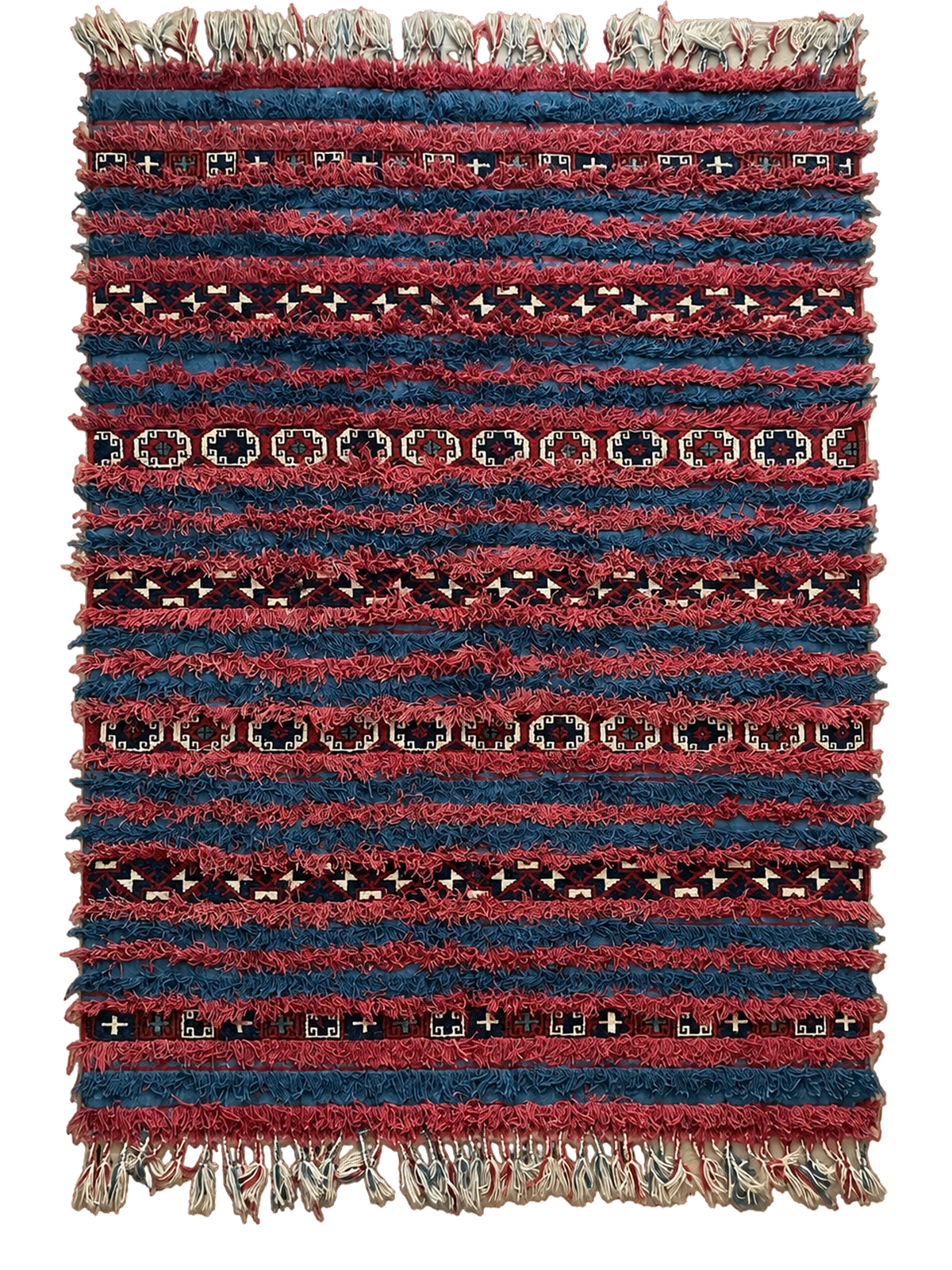
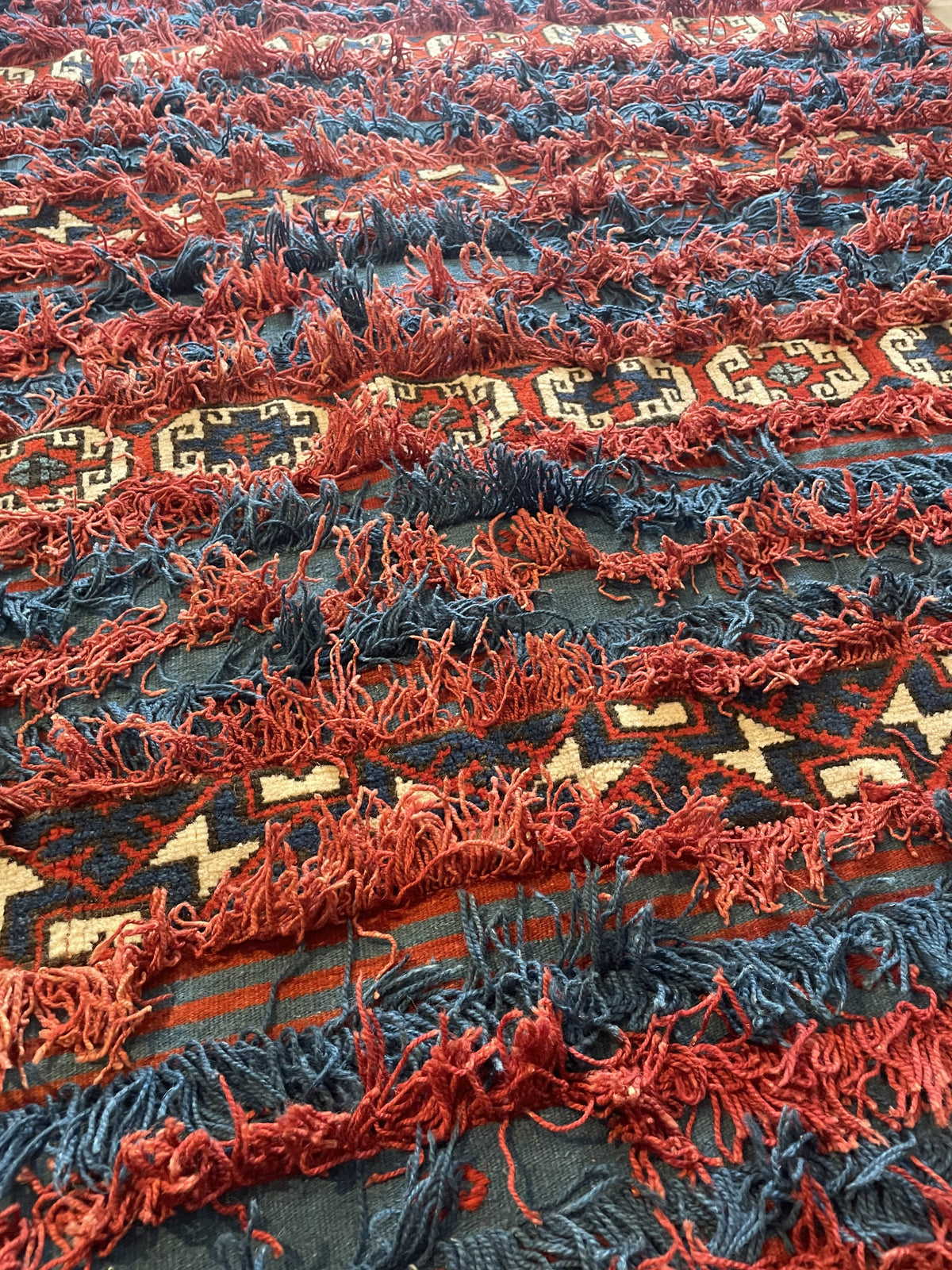
A traditional kilim is a flatwoven rug — no pile, the pattern running clean through both faces. Woven primarily by the village women of Anatolia, kilims carry a genuine visual language: each symbol, or motif, holds a meaning, and together they let a weaver record hopes, fears, and identity. The vocabulary runs deep. The elibelinde, a stylised "hands on hips" female figure, stands for motherhood, fertility, and abundance — an echo of the ancient mother-goddess. Its counterpart, the koçboynuzu or ram's horn, signifies strength and masculinity; the two woven together become bereket, the union of man and woman and the wish for children. Protective symbols abound — the eye and the cross to turn away the evil eye, hooks to guard the flock — alongside emblems of life and continuity: the tree of life, the pomegranate heavy with seeds, running water, the star, the dowry chest that marks a marriage. To read a kilim is to read the life of the woman who made it. Much of this knowledge has quietly faded with the passing of tribal and village ways, which lends the old pieces a particular poignancy — each one a message from a world that is slipping out of reach.